.avif)

.jpg)
The ultimate 12-day Namibia itinerary
Planning a Namibia road trip? Here's exactly how we'd spend 12 days between the desert, the coast, and Etosha's wildlife.

Namibia isn't a country you tick off in a week. Distances here are measured in hours, not minutes, and half the appeal is in the driving itself, watching the landscape shift from mountain passes to gravel plains to towering red dunes, often without seeing another vehicle for an hour at a time.
When we first visited Namibia, we quickly realised there wasn't a ton of information out there. We spent hours researching, trying to figure out which places were actually worth the long drive and which weren't.
This is the 12-day itinerary we landed on, and it worked so well that we've since started running our own 12-day road trips through Namibia.
So if planning the logistics yourself sounds like more hassle than it's worth, join us on one of our women-only group trips to Namibia instead!
Why visit Namibia?
Namibia rewards a particular kind of traveller, one who doesn't mind a long drive for a big payoff. Etosha National Park puts you within metres of elephants and lions gathered at a waterhole.
Sossusvlei has some of the tallest sand dunes on Earth, glowing red at sunrise. Spitzkoppe's granite peaks look like nowhere else on the continent. And because so much of the country is empty desert, the night skies here are some of the darkest and clearest you'll find anywhere.
How long should you spend in Namibia?
Give yourself at least 10 to 14 days if you want to see the highlights properly. Namibia is a country of long drives between big landscapes; Etosha, Damaraland, Spitzkoppe, the coast, and the dunes at Sossusvlei are each worth two or three days on their own.
Any less than 10 days and you'll spend more time in the car than out of it.
If you're lucky enough to have more than 14 days free, you won't struggle to fill them! Add one of the bonus destinations further down this post to your route, or spend a few extra days in Swakopmund, where there's plenty of cafes, beaches, and activities to keep you busy.
Our own itinerary is for 12 days, right in the middle of that range: long enough to cover the highlights properly, short enough that most people can fit it in their annual leave allowance.
How to get around Namibia
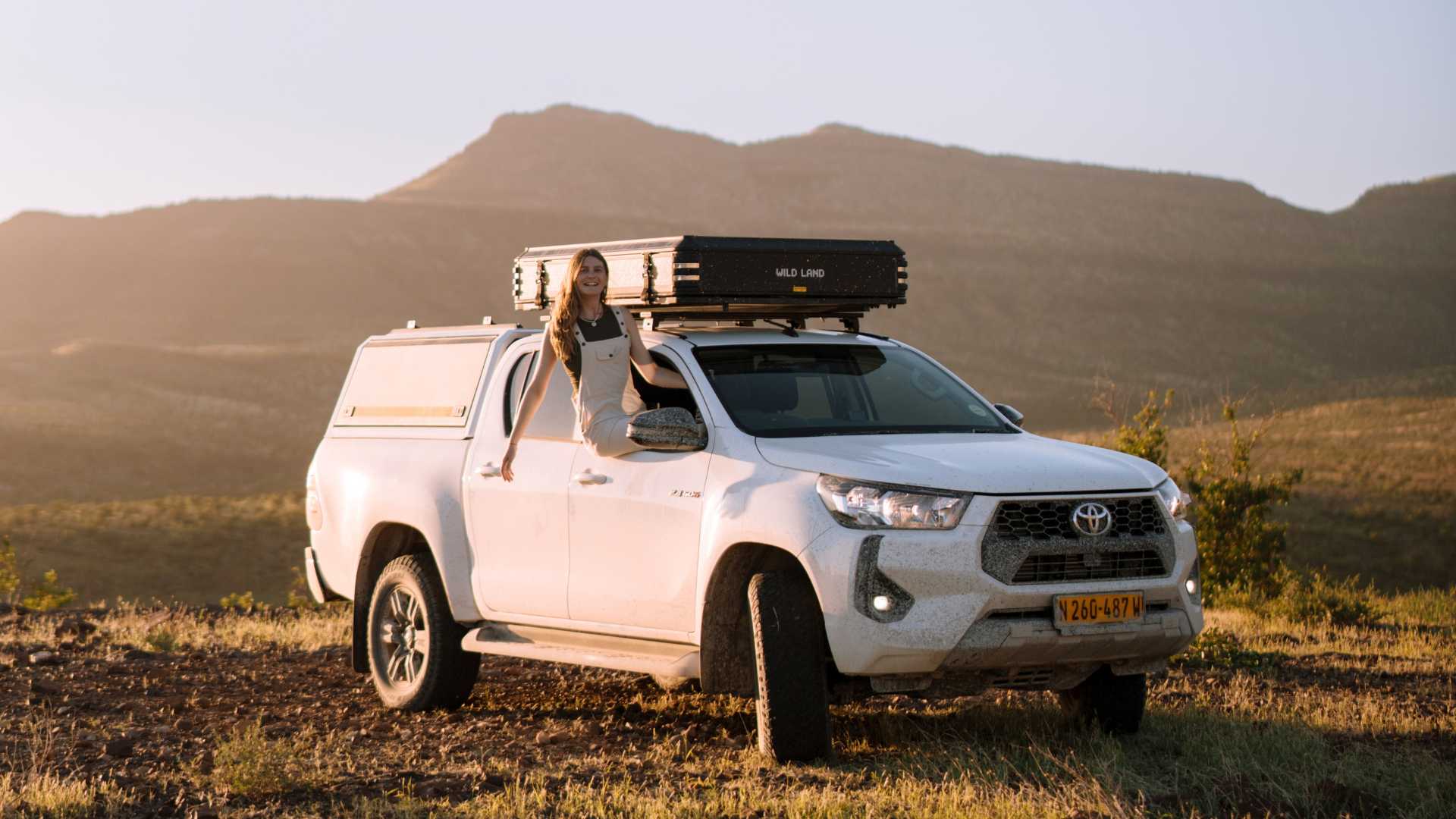
One thing's for sure: you can't rely on public transport to explore Namibia. You'll find buses and shuttles between the bigger towns like Windhoek and Swakopmund, but beyond that, your options dry up fast.
That's why most travellers hire a 4x4 with a rooftop tent. It's your transport and bed in one, and it gives you the freedom to stop wherever the views (or the wildlife) demand. Honestly, we think camping is the best way to experience Namibia.
It turns the trip into a proper road trip, with nights under some of the clearest skies you'll ever see. It's also kinder on your wallet, since accommodation here is mostly lodges, and they can get pricey fast.
Travelling solo or not keen on driving? Join our 12-day Namibia road trip, where we take care of everything: food, transport, accommodation, activities, and an awesome local female guide who knows the country inside out.
The best 12-day Namibia itinerary
Day 1: Touch down in Windhoek
Land in Windhoek and settle into your accommodation for the night. Ease into the trip with a traditional braai for dinner, Namibia's answer to a barbecue.
Day 2: Walking tour of Windhoek
Windhoek is the perfect place to ease into Namibia. Start with a free walking tour of the capital to get your bearings and a crash course in the country's history.
From German colonial rule and the Herero and Nama genocide to decades of South African apartheid, it's heavy going, but adds real depth to everything you'll see over the rest of your trip.
In the afternoon, head to Penduka, a women-owned social enterprise in Katutura Township. Stop for a plate of local food, browse the handmade crafts, or join one of their workshops. It's a great way to spend your money somewhere it makes a difference.
Short on time or itching for the desert? Skip Windhoek altogether and add an extra day in Swakopmund instead.
Day 3: North to Etosha National Park
A long drive north, broken up with roadside stops for lunch and supplies, brings you to Etosha National Park.
The great thing about this place is that you can do self-drive safaris and actually camp inside the national park.
We recommend spending both nights at Okaukuejo Camping Area, or moving to Halali Camp for your second night in Etosha. And the day doesn't have to end at sunset: the floodlit waterholes at the rest camps are perfect for spotting animals coming to drink after dark.
If you have enough energy, sign up for the night safari when you arrive. A whole new world comes alive once the sun has set.
Day 4: A full day on safari in Etosha National Park
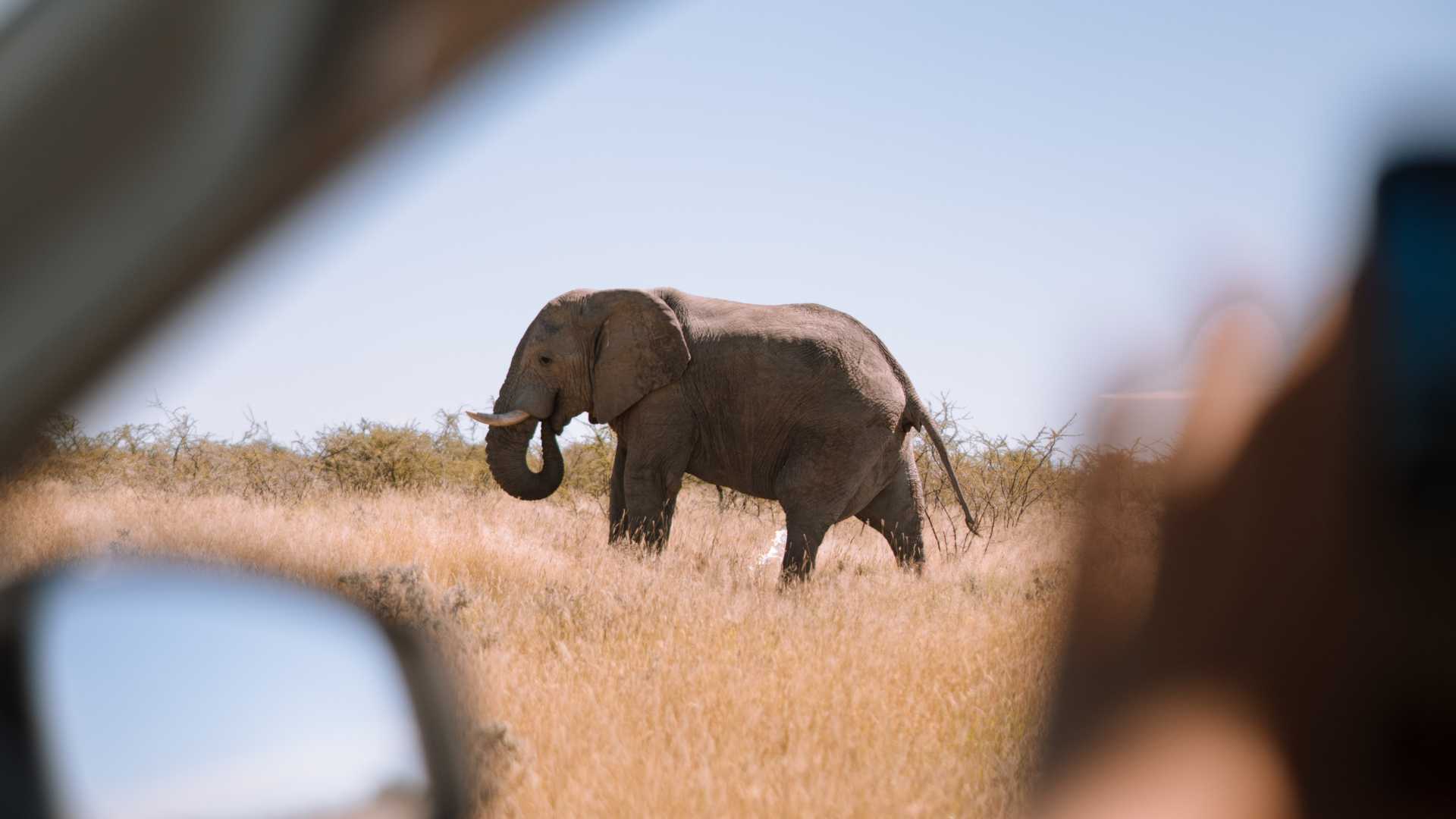
Our 12-day Namibia itinerary includes two nights in Etosha National Park, giving you a full day dedicated to tracking wildlife.
Set off early for the best chance of spotting elephants, lions, giraffes, rhinos, zebras and huge herds of antelope before the midday heat drives them into the shade.
The best strategy is simple: drive between the park's waterholes, settle in, and wait to see who turns up. Patience (and a little luck) can be rewarded with unforgettable sightings.
When you need a break, the picnic sites scattered throughout the park are handy spots to grab a bite and stretch your legs.
Day 5: Drive from Etosha National Park to Damaraland
A longer travel day, but not a dull one. Take the road through Etosha to see even more animals on your drive out before the landscape shifts into Damaraland's dramatic, semi-arid terrain, a proper introduction to the desert scenery.
Damaraland isn’t on everyone’s Namibia itinerary, but its distinct landscapes are something we don’t think anyone should miss.
We recommend staying at Palmwag Lodge or campsite.
Day 6: Slow down in Damaraland
.jpg)
After a few big days, this one's deliberately gentle. An optional morning walk through the surrounding landscape is followed by an afternoon to stop and relax.
The lodge we recommend has beautiful facilities, including a pool, plus plenty of activities if you don’t feel like relaxing.
Day 7: San culture and sunset at Spitzkoppe
Just outside Spitzkoppe, stop at a San village to learn about one of the oldest cultures on Earth, with roots stretching back well over 100,000 years.
You'll get a glimpse into traditional San life, from tracking and bush medicine to starting fire by hand, and your visit directly supports the community.
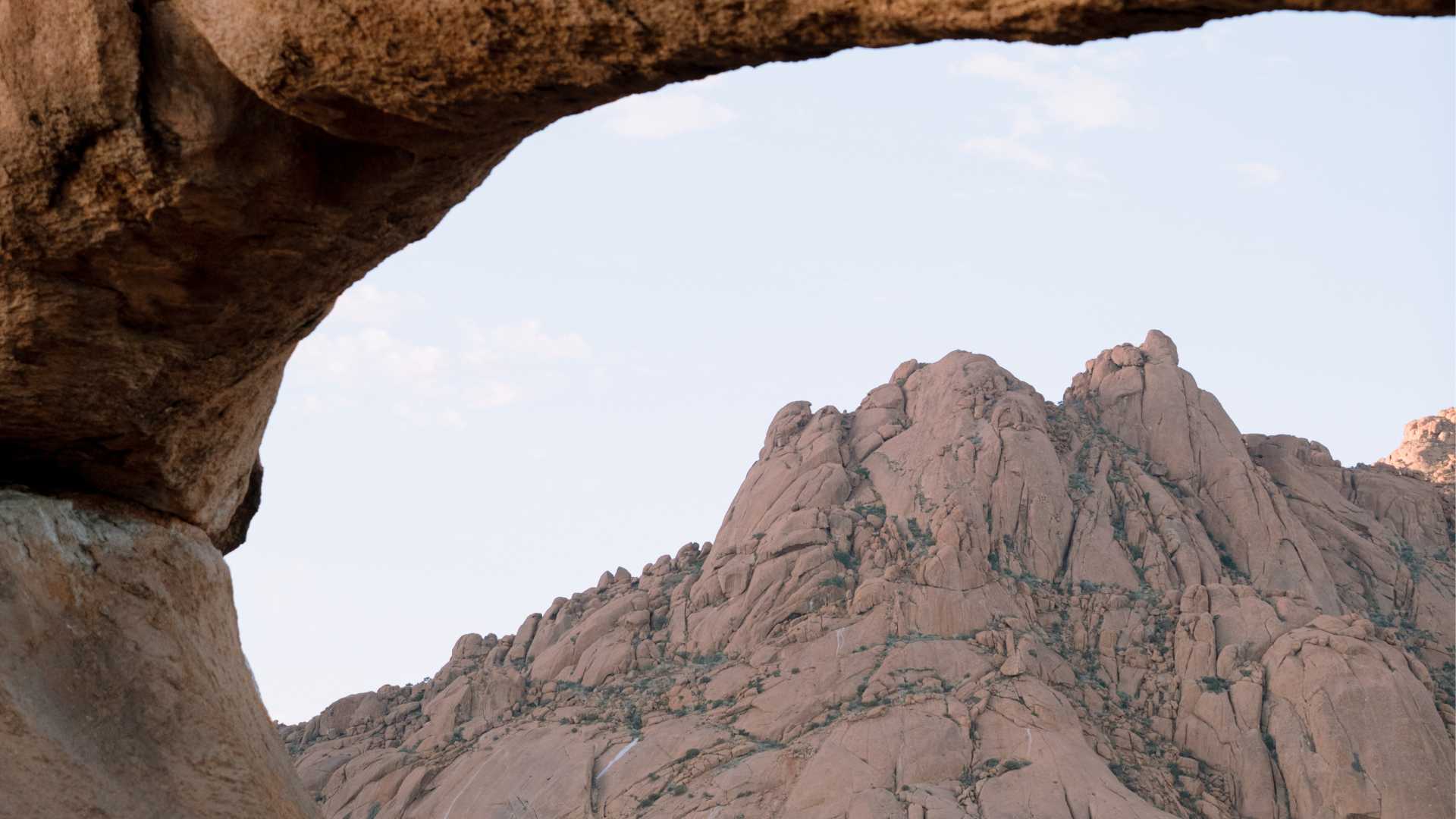
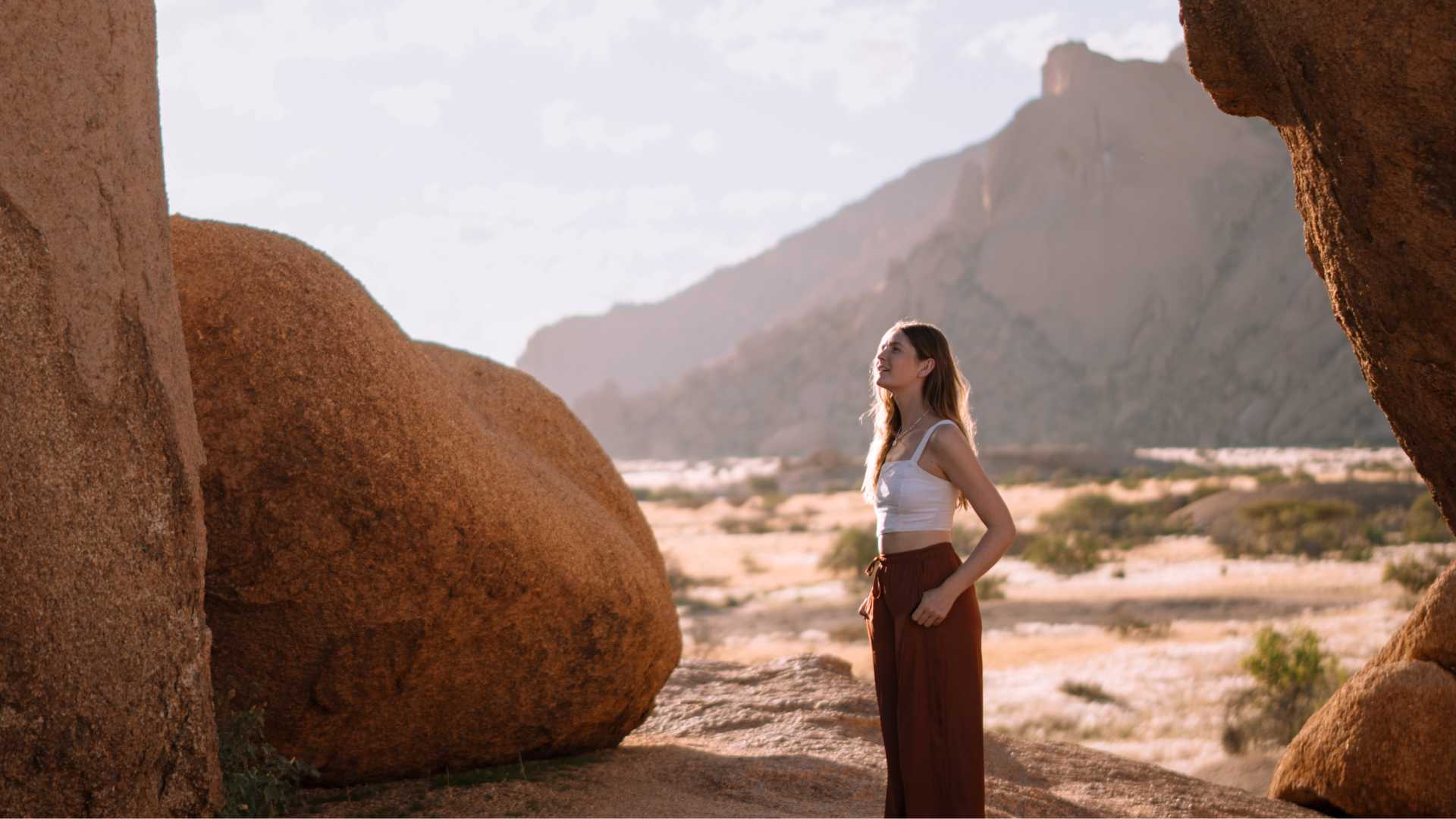
From there, it's a short drive to Spitzkoppe, the "Matterhorn of Namibia." Set up camp beneath its granite peaks in time for sunset, when the rocks glow a deep orange. It's one of the best in the country.
If you have time, explore Spitzkoppe's famous rock formations, especially the Rock Arch, which is stunning at sunset or under the stars.
Day 8: Hike in Spitzkoppe and drive to Swakopmund
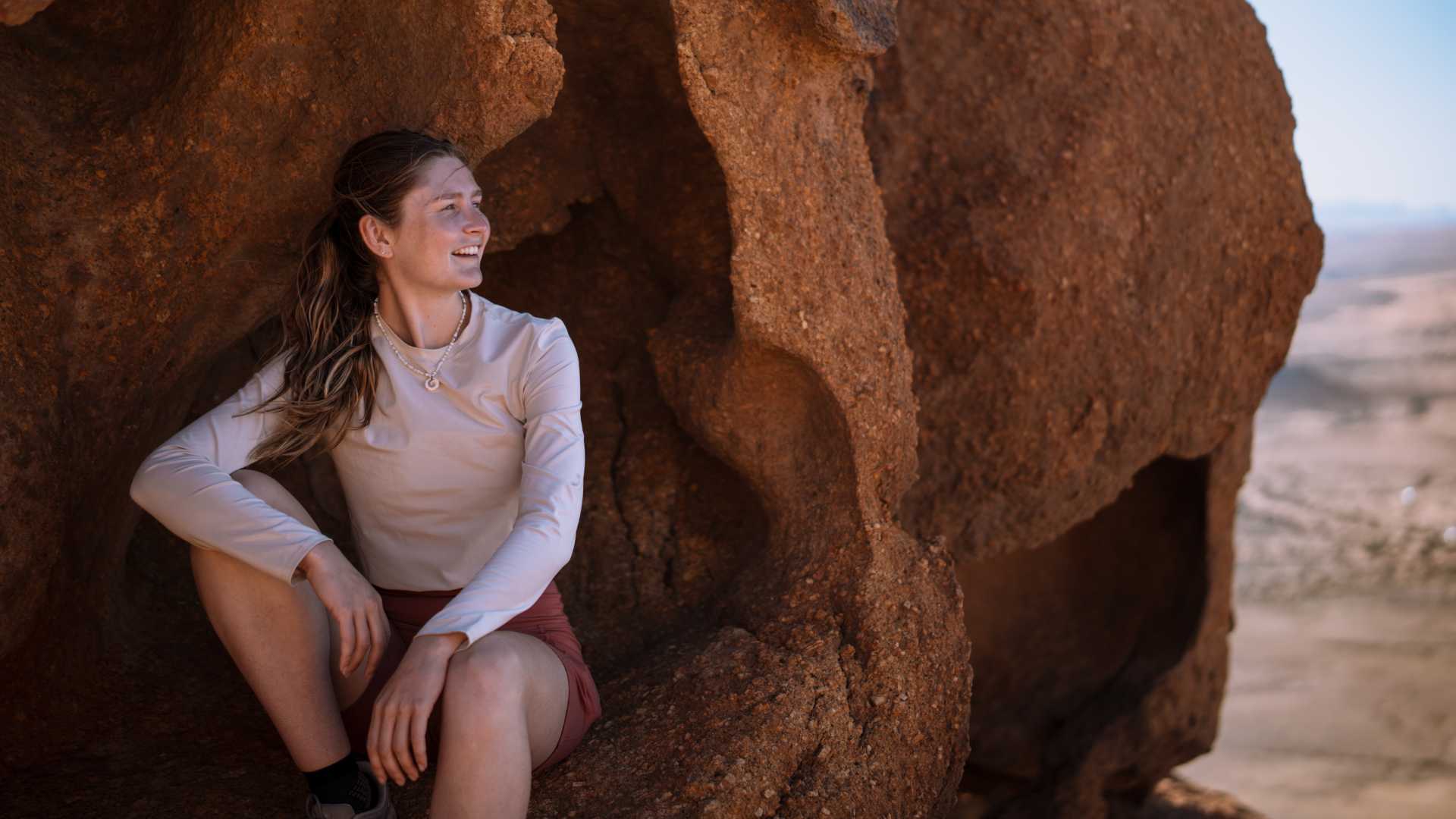
You can spend your morning in Spitzkoppe in a couple of ways: seek out the ancient San rock paintings tucked among the boulders, or lace up for one of the area's more challenging hikes.
We chose the 2–3 hour hike up to Pontok Summit. It's steep, with a bit of scrambling near the top, but the payoff is huge: sweeping views over the desert plains that make every step worth it.
Afterwards, refuel at the on-site café (lunch here is surprisingly good) before the two-hour drive to Swakopmund. On the way into town, stop at the Genocide Museum.
It's a difficult visit, but an essential one, offering an honest look at the brutality of Namibia's colonial past.
Day 9: Explore Swakopmund and Sandwich Harbour
Swakopmund's coastal setting means there's plenty to do, whether you're after adventure or a well-earned breather.
For something unforgettable, head down the coast to Walvis Bay and go kayaking with seals at Pelican Point. Hundreds of Cape fur seals live here, and they're famously curious, often popping up right beside your kayak to take a closer look.
Alternatively, book a 4x4 trip out to Sandwich Harbour, where towering sand dunes plunge straight into the Atlantic.
It's one of Namibia's most dramatic sights, and the drive itself is half the fun as your guide navigates the dunes and the narrow strip of beach between them and the waves.
Or simply slow down. After days on the road, Swakopmund is the perfect place to catch your breath: stroll along the jetty, wander past the town's pastel German colonial buildings, grab a coffee in one of the cafés, and watch the sun sink into the ocean.
Day 10: Travel to Sesriem
Today's 5–6 hour drive takes you from the Atlantic coast deep into the desert, and the scenery shifts constantly along the way. Keep an eye out for the Tropic of Capricorn sign, a classic photo stop along the way.
Break up the journey in Solitaire, a tiny, dusty outpost with little more than a petrol station, a few rusting old cars, and a bakery famous across Namibia for its apple pie.
Aim to reach Sesriem by late afternoon and camp just inside the park gates. Staying here means you can enter the dunes before the day-visitor crowds, ready for an early start and sunrise over Sossusvlei tomorrow.
Day 11: Climb dunes and watch sunrise at Deadvlei
It's an early alarm today, but it's worth it. Climb the dunes at sunrise as the sand glows from deep shadow to fiery red. Big Daddy offers a tough but rewarding climb overlooking Deadvlei, while Dune 45 is an easier alternative.
Below lies Deadvlei, a stark white clay pan dotted with camel thorn trees that died roughly 600–900 years ago. The air is so dry that they've never decomposed, and they still stand, blackened against the red sand. It's the image most people picture when they think of Namibia, and it's even more surreal in person.
Afterwards, drive back to Windhoek for a final night before flying home.
Day 12: Fly home from Namibia
Transfer to Hosea Kutako International Airport in Windhoek for your onward flight after 12 days and a full loop of some of Namibia's most striking landscapes.
Want longer than 12 days?
If you've got extra time either side of the trip, a few places are worth building in:
The Skeleton Coast, a genuinely eerie stretch of coastline north of Swakopmund, scattered with shipwrecks and seal colonies, named for a reason.
Kolmanskop, an abandoned diamond-mining town near Lüderitz in the south, now slowly being swallowed by sand. It's a detour rather than a quick add-on, but one of the country's more surreal places.
Fish River Canyon, the second-largest canyon in the world, is further south. Worth it if you're already heading that way or have several extra days to spare.
The Zambezi Region, formerly the Caprivi Strip, is in Namibia's northeastern panhandle. If you're chasing more wildlife and water after the desert, it also connects naturally to a trip into Botswana and on to Victoria Falls, which is exactly the route our Botswana safari trip follows.
When is the best time to visit Namibia?
Namibia's dry season runs from roughly May to October. Across these months, you'll get long stretches of clear skies and next to no rain, with wildlife concentrated around waterholes, which makes for some of the best game viewing of the year and is exactly why our own trip runs within this window.
What catches most people off guard isn't the season so much as the daily swing in temperature. Days can be warm to hot, often into the high 20s to 30s°C, while early mornings and evenings, especially camping in the desert, drop into single figures and sometimes below freezing. Whatever month you travel in, pack for both ends of the thermometer.
Our Namibia packing list covers exactly what to bring.
Why is joining a group trip the best way to see Namibia?
Namibia can be a tricky country to explore solo. With limited public transport and huge distances between destinations, your own vehicle is almost essential, and covering the cost of a hire car alone adds up fast.
Joining a group trip takes care of all that, and lets you be the passenger princess: no long hours behind the wheel, just sitting back and soaking up the scenery. Best of all, you get to share the experience.
We've been told countless times that our trips are life-changing, and while the destinations play a big part, it's the incredible women who join us that create the real magic.
Join us in Namibia or somewhere else in the world
Ready to see it for yourself? Take a look at our Road Trip Through Namibia itinerary, or browse all our destinations if you're still deciding where to go next.
Follow @staywild.travel to keep up with new trips and departures.
FAQs
Do I need a visa for Namibia?
Most countries, including citizens from the UK, US, EU, Canada and Australia, require a visa to visit Namibia. You can check whether you need a visa here.
A 90-day tourist visa costs N$1,600 (approximately £75) and can be obtained either by applying online for an e-visa or on arrival in Namibia.
Is Namibia safe?
Namibia is generally considered one of the safer countries in Africa for travellers. It has a stable tourism industry, friendly locals, and many visitors travel independently or on road trips without issues.
The main things to be aware of are petty crime in some urban areas, keeping valuables secure, and taking care while driving long distances, especially on gravel roads and in remote areas.
What language do they speak in Namibia?
Namibia is a very multilingual country, with over 20 languages and dialects spoken across its communities.
The main languages include English (the official language), Oshiwambo, Afrikaans, Khoekhoegowab (Nama/Damara), Otjiherero, German, and several San languages. Many Namibians are multilingual and speak more than one language.
What is the food like in Namibia?
Namibian cuisine is a mix of African, German, and South African influences, with a strong focus on hearty meals, grilled meats, game, and fresh seafood along the coast.
Who is Stay Wild Travel?
Stay Wild organises group trips for women to adventurous destinations – places you may have thought were too challenging to explore solo or too complicated to plan.
Our tours are all about authentic local experiences, empowering women, and building meaningful connections with the people, culture, and traditional cuisines of each destination.
You’ll share these unforgettable moments with a group of like-minded women, completely stress-free.
Why should I join a Stay Wild group trip?
For us, travel is more than just ticking off the top sights – it’s about connecting with local culture, enjoying traditional food, and sharing unforgettable experiences with local people. It’s about stepping out of your comfort zone, embracing new challenges, and creating memories that last a lifetime.
And the best part? You can leave all the planning to us. We've crafted the perfect itinerary and partnered with exceptional local guides who will be there every step of the way.
Need more convincing? Send us a message on Instagram @staywild.travel or via our contact form.
What type of travellers join the trips?
Our tours are for all women 18 and over who share a passion for travel, adventure, and meaningful connections. While many of our travellers are solo, we also welcome friends, mothers, daughters, and sisters.
Age is just a number on our trips. We know that the fiery love for travel never stops, no matter your age.
.jpg)
Keep Exploring
Discover more travel tips, recommendations and stories from inspiring female travellers.
.jpg)
