.avif)

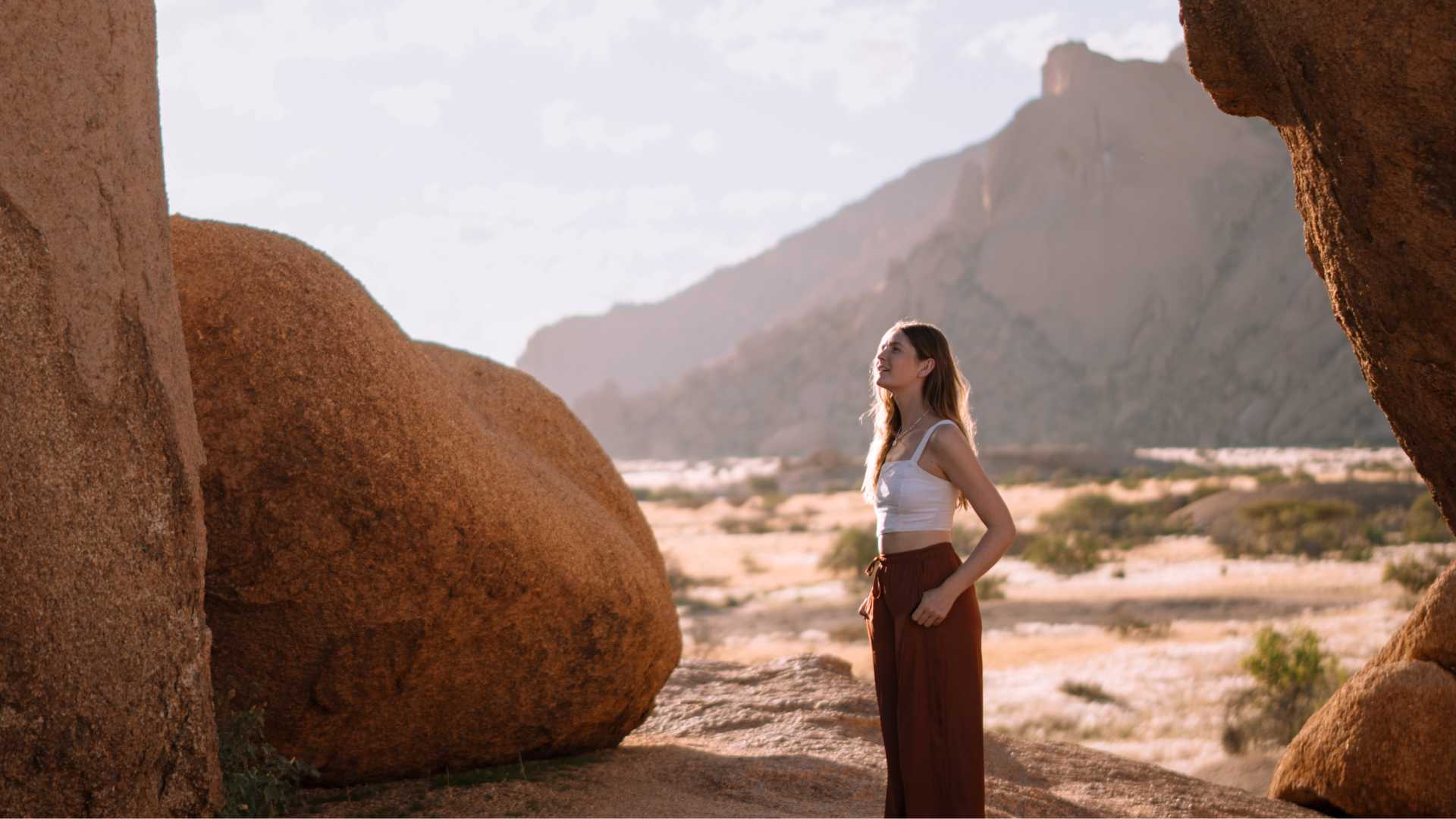
What to pack for your Namibia road trip
Wondering what to pack for Namibia? Here's exactly what you need for desert camping, game drives, and days that go from scorching to freezing.

Namibia doesn't ease you in gently. One minute you're standing at the top of a 300-metre dune watching it turn copper in the evening light, the next you're digging out every layer you packed because the desert has dropped ten degrees in an hour. That contrast, scorching afternoons giving way to genuinely cold nights, is what catches most first-time visitors off guard, and it's the main thing your packing needs to account for.
Because so much of this trip happens outdoors – camping most nights, dawn game drives, long stretches on gravel roads between stops – what's in your bag matters more here than it would on a city break. Pack well, and you won't think about it again. Get it wrong, and you'll spend a 6 am game drive in Etosha wishing you'd brought a warmer jacket.
Accommodation in Namibia isn't cheap, so most travellers camp their way across the country instead of booking lodges. It's also just a better way to do it! Camping under the stars each night makes the whole trip feel like a proper road trip. That's why this list is built for camping, not for the fancier lodge-stay route that's really your only other option here.
Haven't booked your trip to Namibia yet? Join us on our 12-day Road Trip Through Namibia, a group trip adventure through the Namib Desert, Damaraland, and Etosha National Park.
Is Namibia worth visiting?
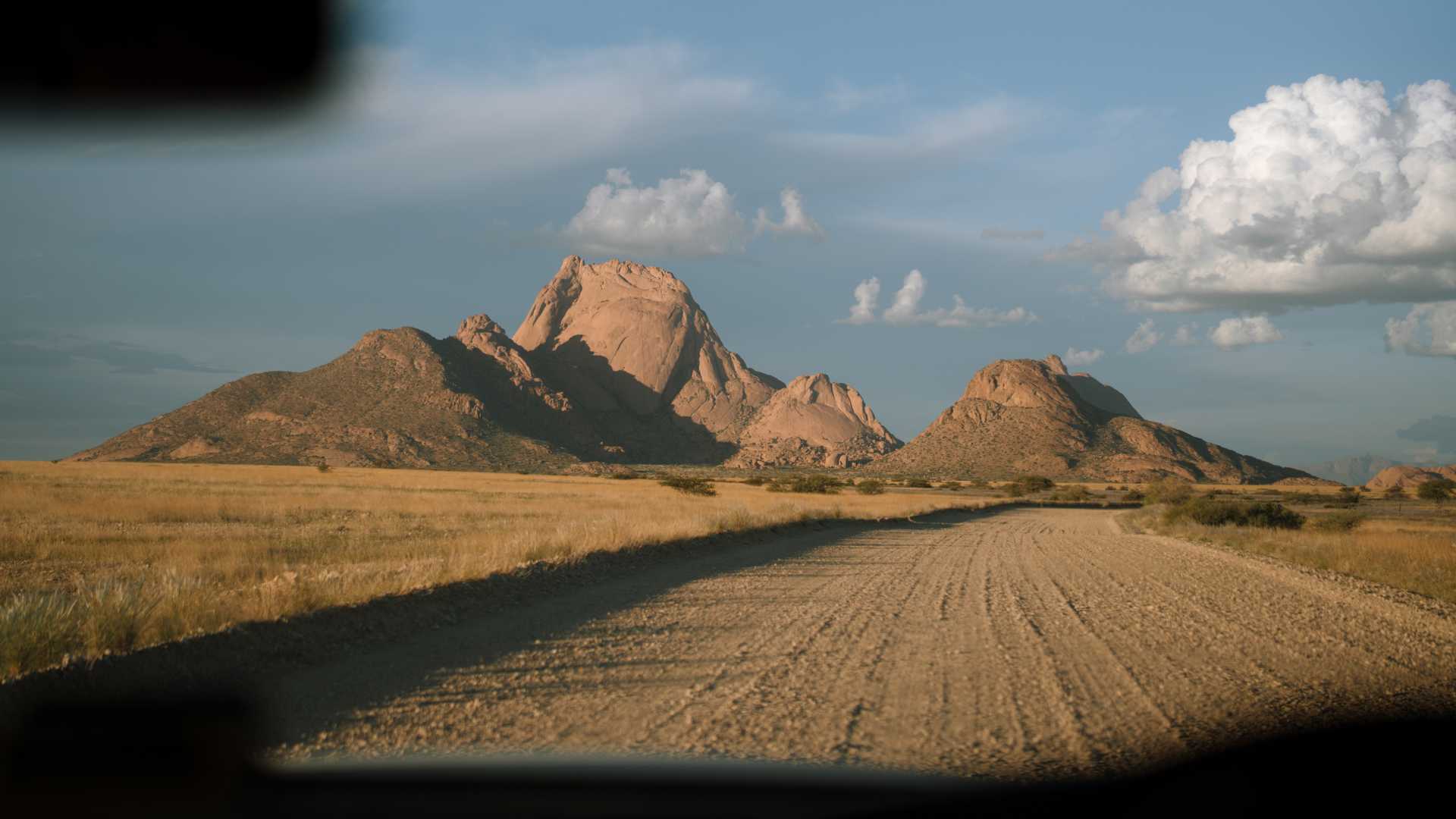
Namibia is absolutely worth visiting, especially if you're looking for a destination that feels wild, remote, and different. It's home to some of Africa's most dramatic landscapes, from towering desert dunes and rugged coastlines to vast open plains filled with wildlife.
It's a place where you can sleep under some of the world's clearest skies, explore ancient landscapes, and feel fully immersed in nature. It's particularly special for travellers who enjoy road trips, camping and nature.
What makes Namibia different to plan for
Namibia is enormous and largely empty. It has one of the lowest population densities of any country on Earth, which is exactly why it works so well for the things people come here to do: watch wildlife gather at waterholes undisturbed, drive for hours without seeing another car, and look up at a night sky with almost zero light pollution.
That same emptiness is what makes the logistics different from many other trips. Distances between towns are long, roads are often gravel rather than tar, and once you're camping in Damaraland or out at Sossusvlei, you're relying on what's in the vehicle. Pack with that in mind, rather than assuming you can top up as you go.
When is the best time to visit Namibia?
Namibia's dry season runs from roughly May to October. Across these months, you can expect long stretches of clear skies and next to no rain, with wildlife concentrated around waterholes, which makes for some of the best game viewing of the year.
What matters more than the exact month is the daily temperature swing, which holds true across the whole dry season. Whenever you travel within it, a typical day tends to look something like this:
- Daytime: warm to hot, often into the high 20s–30s°C (80s–90s°F) under strong, direct sun
- Early morning: cool to cold, commonly single digits to mid-teens (40s–50s°F), enough to want a proper jacket before a sunrise game drive
- Evening and overnight: cold, sometimes dropping close to or below freezing inland, particularly in the desert and further south during the cooler months of June to August
Layering isn't optional here the way it might be elsewhere; it's the difference between a comfortable morning and a miserable one. Check the specific month of your trip closer to the time, but pack for both ends of the thermometer, no matter when you go.
We run our Namibia itinerary between May and August.
How long do you need to visit Namibia?
.jpg)
Namibia rewards time more than most countries, mainly because of the driving involved. Etosha, Damaraland, Spitzkoppe, Swakopmund, and Sossusvlei are each worth 2-3 days, and drives between each one can take anywhere from 2-6 hours.
10-12 days is enough to string these together properly without every day being a driving day. Much less than that and you'll spend more time in the vehicle than out of it, which rather defeats the purpose of a country built for slow, wide-open travel.
Our own 12-day road trip through Namibia is built around this pacing: enough ground covered to see the highlights, and enough time in each place to actually experience them.
What to wear in Namibia as a tourist
There's no religious or cultural dress code to navigate here, so what you wear is really dictated by the trip itself rather than local expectations. Between city days, camping, and safari drives, the day-to-day brief comes down to comfort, dust, and the drastic change in temperature.
What should you wear on safari in Namibia?

On safari in Namibia, muted colours like khaki, olive, brown, and stone help you blend in rather than stand out to wildlife, and they hide dust far better than anything white or brightly coloured will after a week on gravel roads. Bright colours and heavy perfume are both worth leaving at home for game drives specifically.
Because mornings start cold and afternoons run hot, dress in layers.
What to pack for Namibia
Clothing for cities
- Tops, T-shirts, long-sleeve shirts
- Dresses, skirts, trousers, shorts
- Light jacket or cardigan
Clothing for camping and safari
- Lightweight T-shirts and long-sleeve tops
- Trousers and shorts
- A warm fleece or jumper
- Waterproof jacket
- Warm jacket or down jacket, for early mornings and cold desert nights
- Pyjamas or thermals
- Comfortable walking shoes
- Sandals
- Socks and underwear
- Sports bra
- Swimwear
- Sunhat
- Sunglasses
Toiletries
- Shampoo and conditioner
- Body wash
- Deodorant
- Toothbrush and toothpaste
- Suncream, and plenty of it; the desert sun is stronger than it looks
- Lip balm with SPF
- Insect repellent
- Personal medication
- Hand sanitiser
- Tissues or toilet paper, not always provided at camps
- Baby wipes, useful on nights without a shower
The extras that make the biggest difference
- Travel adaptor: Namibia mainly uses Type M sockets, with the occasional Type D, C or G in hotels or newer buildings. A standard universal adaptor often doesn't fit Type M, so bring one rated for Namibia or South Africa specifically.
- Headlamp
- Buff to protect your face from the sun and dust
- Reusable water bottle
- 15–25L day pack
- Power bank
- Water filter or purification tablets (a LifeStraw or Sawyer-style filter works well), useful if you'd rather not rely on bottled water for the whole trip
- Binoculars
Can you buy supplies along the way in Namibia?
Like we’ve mentioned before, there are big distances between places in Namibia. You’ll find sizeable supermarkets in places like Windhoek, Swakopmund and other larger cities. Otherwise, you’ll mainly be reliant on service stations to top up on anything you need.
Is Namibia safe?
Namibia is consistently rated among the safest and most politically stable countries in Africa. Crime rates are low, particularly outside the cities, and the areas this kind of trip covers are well used to tourism.
What’s the best way to get around Namibia?
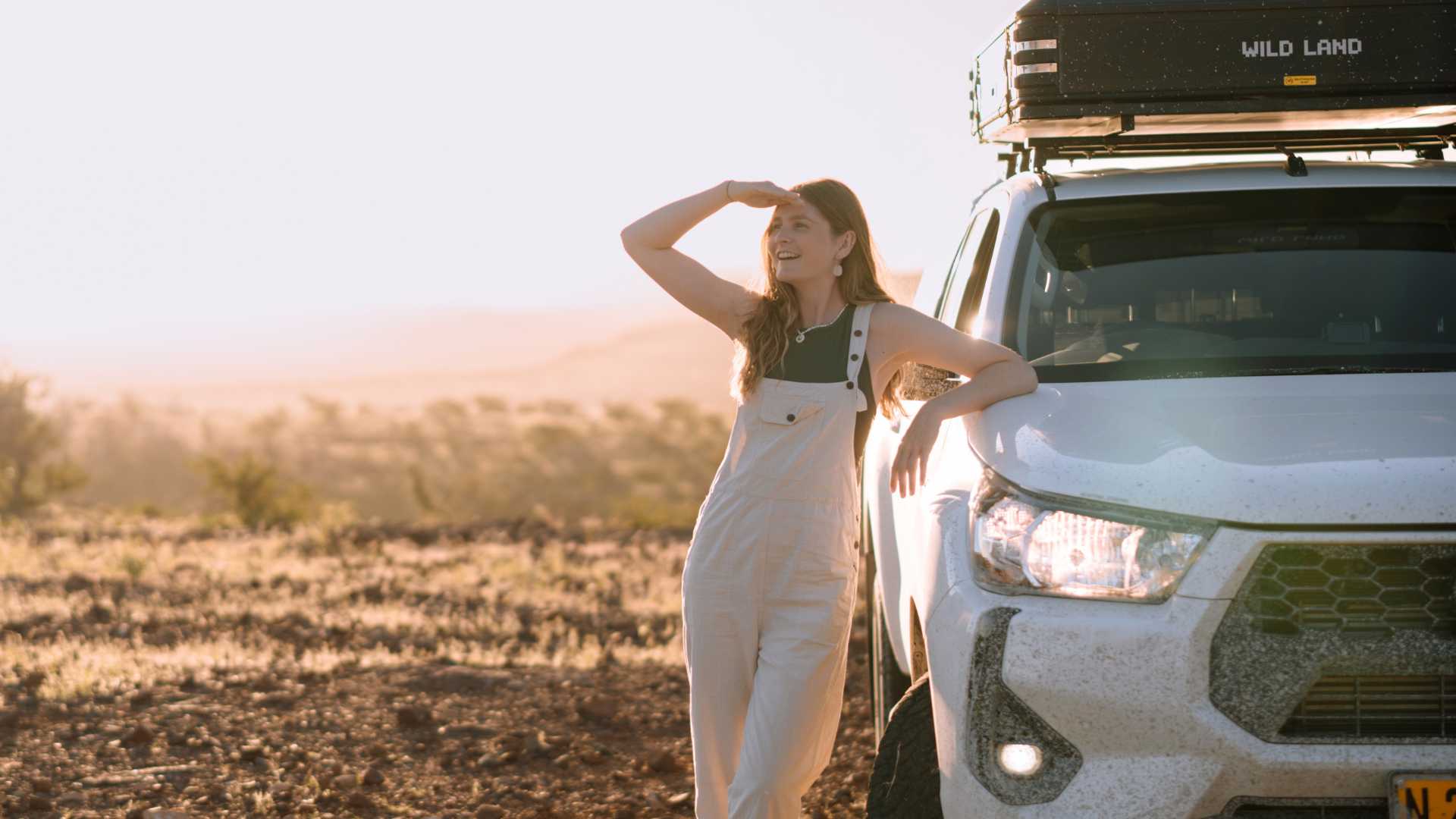
This is a self-drive country by nature. Roads connecting the major sights are generally well maintained, though a good number of them are gravel rather than tar, and the distances between towns are genuinely long.
Public transport barely exists outside the cities, which is exactly why a guided road trip, rather than trying to piece together buses and transfers, is a great option to see Namibia properly.
Come on a group trip to Namibia with us
We run women-only group trips to Namibia which take you through some of the country’s most striking landscapes, from the dunes at Sossusvlei to the wildlife of Etosha, with all the logistics, camping and driving handled so you can actually be present for it.
Take a look at our Road Trip Through Namibia itinerary, or get in touch if you've got questions before booking.
Follow @staywild.travel for more from this trip, our other exciting destinations and upcoming departures.
FAQs
Do I need a visa for Namibia?
Most countries, including citizens from the UK, US, EU, Canada and Australia, require a visa to visit Namibia. You can check whether you need a visa here.
A 90-day tourist visa costs N$1,600 (approximately £75) and can be obtained either by applying online for an e-visa or on arrival in Namibia.
What is the food like in Namibia?
Namibian cuisine is a mix of African, German, and South African influences, with a strong focus on hearty meals, grilled meats, game, and fresh seafood along the coast.
What language do they speak in Namibia?
Namibia is a very multilingual country, with over 20 languages and dialects spoken across its communities.
The main languages include English (the official language), Oshiwambo, Afrikaans, Khoekhoegowab (Nama/Damara), Otjiherero, German, and several San languages. Many Namibians are multilingual and speak more than one language.
Who is Stay Wild Travel?
Stay Wild organises group trips for women to adventurous destinations – places you may have thought were too challenging to explore solo or too complicated to plan.
Our tours are all about authentic local experiences, empowering women, and building meaningful connections with the people, culture, and traditional cuisines of each destination.
You’ll share these unforgettable moments with a group of like-minded women, completely stress-free.
Why should I join a Stay Wild group trip?
For us, travel is more than just ticking off the top sights – it’s about connecting with local culture, enjoying traditional food, and sharing unforgettable experiences with local people. It’s about stepping out of your comfort zone, embracing new challenges, and creating memories that last a lifetime.
And the best part? You can leave all the planning to us. We've crafted the perfect itinerary and partnered with exceptional local guides who will be there every step of the way.
Need more convincing? Send us a message on Instagram @staywild.travel or via our contact form.
.jpg)
Keep Exploring
Discover more travel tips, recommendations and stories from inspiring female travellers.
.jpg)

