.avif)

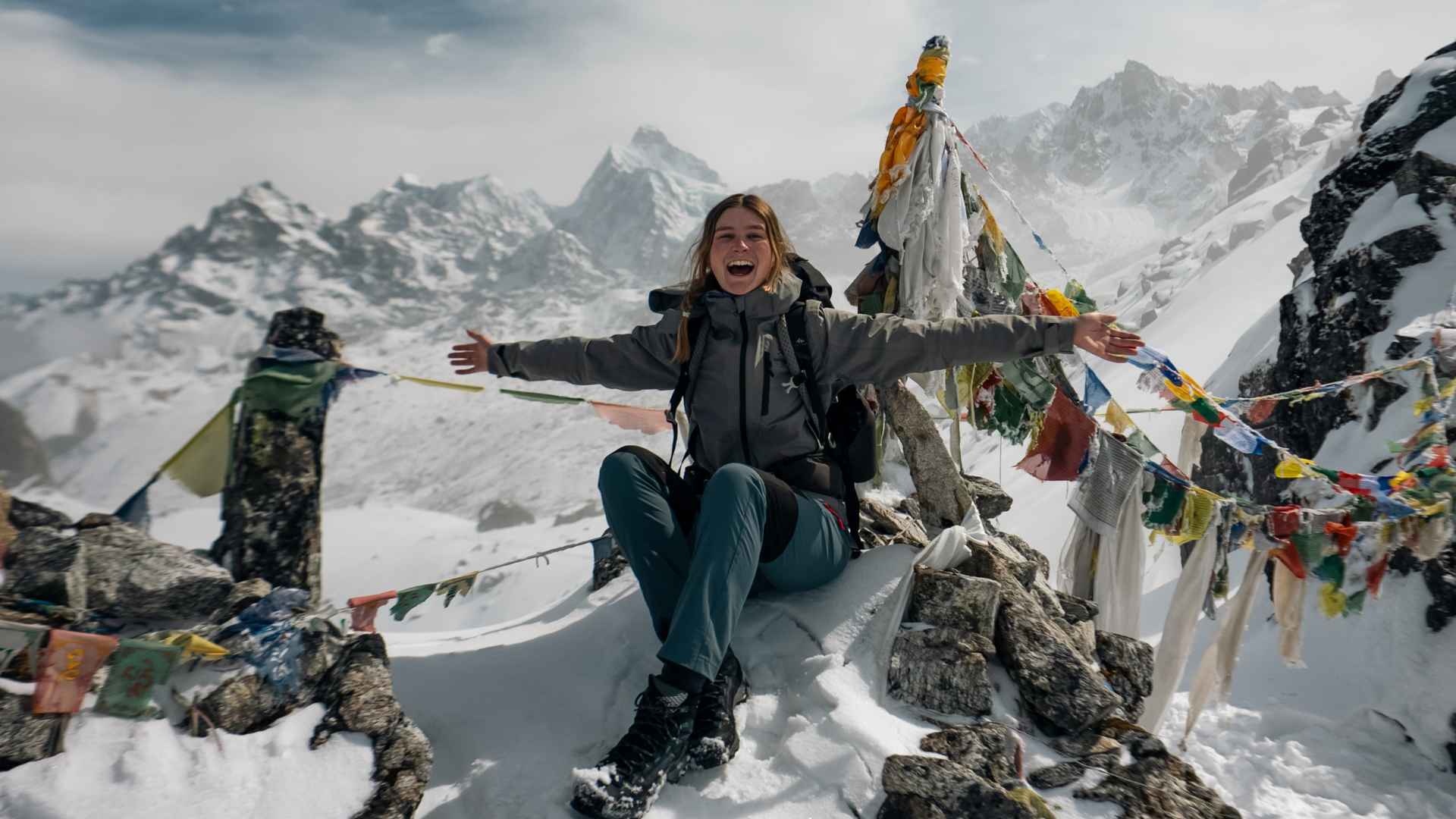
Everything you need to know about the Kanchenjunga Circuit in Nepal
Find out whether the Kanchenjunga Circuit in Nepal is the hike for you.

Most people have never heard of the Kanchenjunga Circuit trek in Nepal. I hadn’t only a few months ago, but after returning only a few days ago, I couldn’t wait to share more about this largely unknown, remote trek that might be in my top five.
Hidden in the far eastern corner of Nepal, close to the border with India and Tibet, this trek circles Mount Kanchenjunga, the world’s third-highest mountain at 8,586 metres, and takes you deep into landscapes that still feel untouched, unpredictable, and completely raw.
Unlike Everest or Annapurna, there is no sense of a polished trekking highway here. Instead, there are long, quiet trails, remote villages where life hasn’t changed much in decades, and mountain views that appear suddenly and stop you in your tracks without warning.
You’re probably thinking that if it’s so amazing, why isn’t it popular? I’ll get into that. Continue reading to find out why this trek is so great, the best time to do it, what to bring, and the exact itinerary we followed.
If you love Nepal, you'll probably love our amazing list of group trip destinations.
Why trek the Kanchenjunga Circuit?

The Kanchenjunga Circuit is for people who have already started to feel that the more popular Himalayan treks are just a little too comfortable and busy. Or for those who simply want to go straight into something wilder, quieter, and more demanding.
What makes it so special is not just the scale of the mountains, but the sense of remoteness. You move through landscapes where you can walk for hours without seeing another group, where villages are small clusters of stone and wood, and where te mountains dominate every direction you turn.
Culturally, the trek is just as rich as it is remote, with its villages influenced by Tibetan culture and tiny mountain monasteries.
For me, my favourite part of the trek was the lack of people, which made the pretty long journey to the trailhead completely worth it. I’ve done the Annapurna Circuit, and having to queue behind people because the trail is so busy isn’t my idea of a tranquil trek.
A big fan of treks without other people? Join one of our Pakistan tours where we hike to the base camp of the 9th-highest mountain in the world and usually don’t see anyone else!
When is the best time to do the Kanchenjunga Circuit?
The best months for the Kanchenjunga Circuit trek are March–May and September–November. That being said, the mountains don’t always play by the rules.
We were there at the end of March/start of April, and we had so much snow that no one reached the north base camp in four days.
The spring months offer the added bonus of rhododendrons, Nepal’s national flower, blooming.
What permits do you need for the Kanchenjunga Circuit?
To access the Kanchenjunga Circuit, trekkers must secure a few official permits before entering the region, as it lies within a restricted, protected area of Nepal.
These include:
- The Kanchenjunga Restricted Area Permit costs approximately $10 per person per week for the first four weeks of trekking, then increases to around $25 per person per week thereafter.
- The Kanchenjunga Conservation Area Project Permit, which costs roughly $20 per person, supports conservation efforts in the region.
- A TIMS (Trekkers’ Information Management System) card, which is also required and typically costs about $20 per person.
If you go with a trekking company like Himalayan Masters, they’ll arrange all of this for you. Plus, you can use the code KATE5 to get 5% off any trek with them.
Do you need a guide for the Kanchenjunga Circuit?
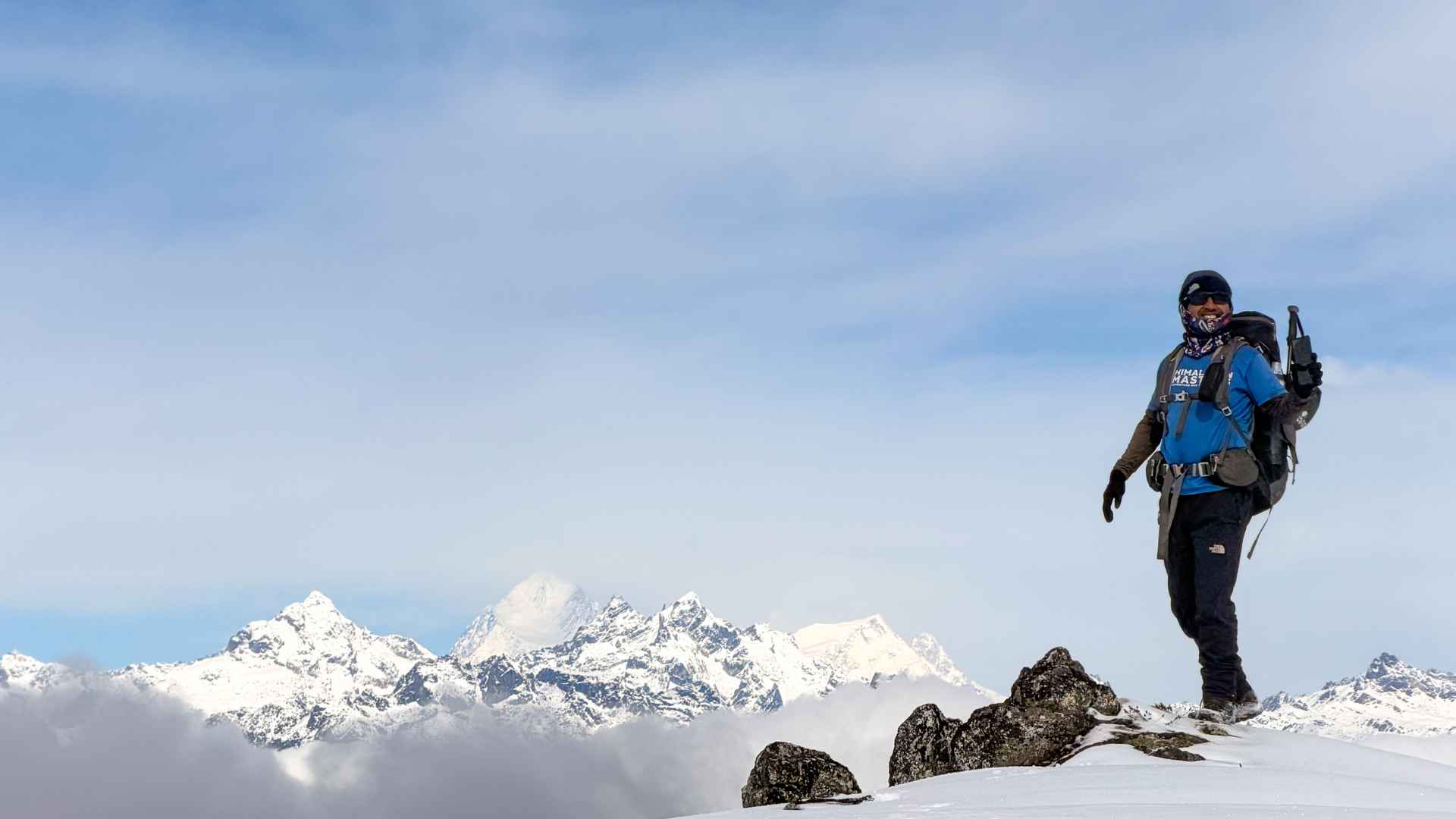
As the Kanchenjunga Circuit is within a restricted area, you will need a guide. Either way, I recommend having a guide – it contributes to the local economy, provides employment opportunities and keeps you safe in the mountains.
The Kanchenjunga Circuit at a glance
– Days: 20
– Distance: 200km (124 miles)
– Max altitude: 5,143m (16873 ft)
– Time walking each day: 4-8 hours
– Number of base camps: 2
–Difficulty: Medium-difficult
Kanchenjunga Circuit 20-day itinerary
This is the itinerary offered by Himalayan Masters (get 5% off with KATE5), who we did the trek with. We did end up combining two of the days at the end, after the south base camp, as we just wanted to get to a hot shower.
Day 1: Fly to Bhadrapur and drive to Phikkal
Leave behind your comfortable bed in Kathmandu (I highly recommend Ama-La Hotel) and head to the airport with your guide, where you’ll take a 1-hour flight from Kathmandu to Bhadradpur.
From here, you’ll hop in a jeep for another 1.5 hours and drive to the hillside town of Phikkal.
Day 2: Drive to Taplejung
It’s a travel day! You’ll spend around 6-8 hours in a jeep taking on Nepal’s mountain roads. To be honest, I actually enjoyed this day as the vibes were high and the views kept you entertained.
Day 3: Drive to Sekathum or Japantar

Now the real adventure begins as you take a 4-hour off-road jeep to the start of the trailhead. Depending on the state of the road, you might have to walk only 30 minutes or 3 hours to your first teahouse of the trek.
We got lucky and only had a 30-minute stroll to kick off the trek.
Day 4: Hike to Amjilosa
Now the trek really begins. Your first day, you’ll be walking through the jungle to Amjilosa. It takes about 4 hours to reach Amjilosa at 2,498 m (8,200 ft), covering 9 km (5.59 miles).
Keep an eye out for red pandas along the way!
The teahouse at Amjilosa is very basic, but offers great views over the valley and snow-capped mountains in the distance.
Day 5: Hike to Gyabla
It’s still relatively easy at this point. You’ll hike for 4-5 hours again, with not too much elevation, to the small town of Gyabla.
Expect more jungle and a beautiful stupa when you arrive.
Day 6: Hike to Ghunsa
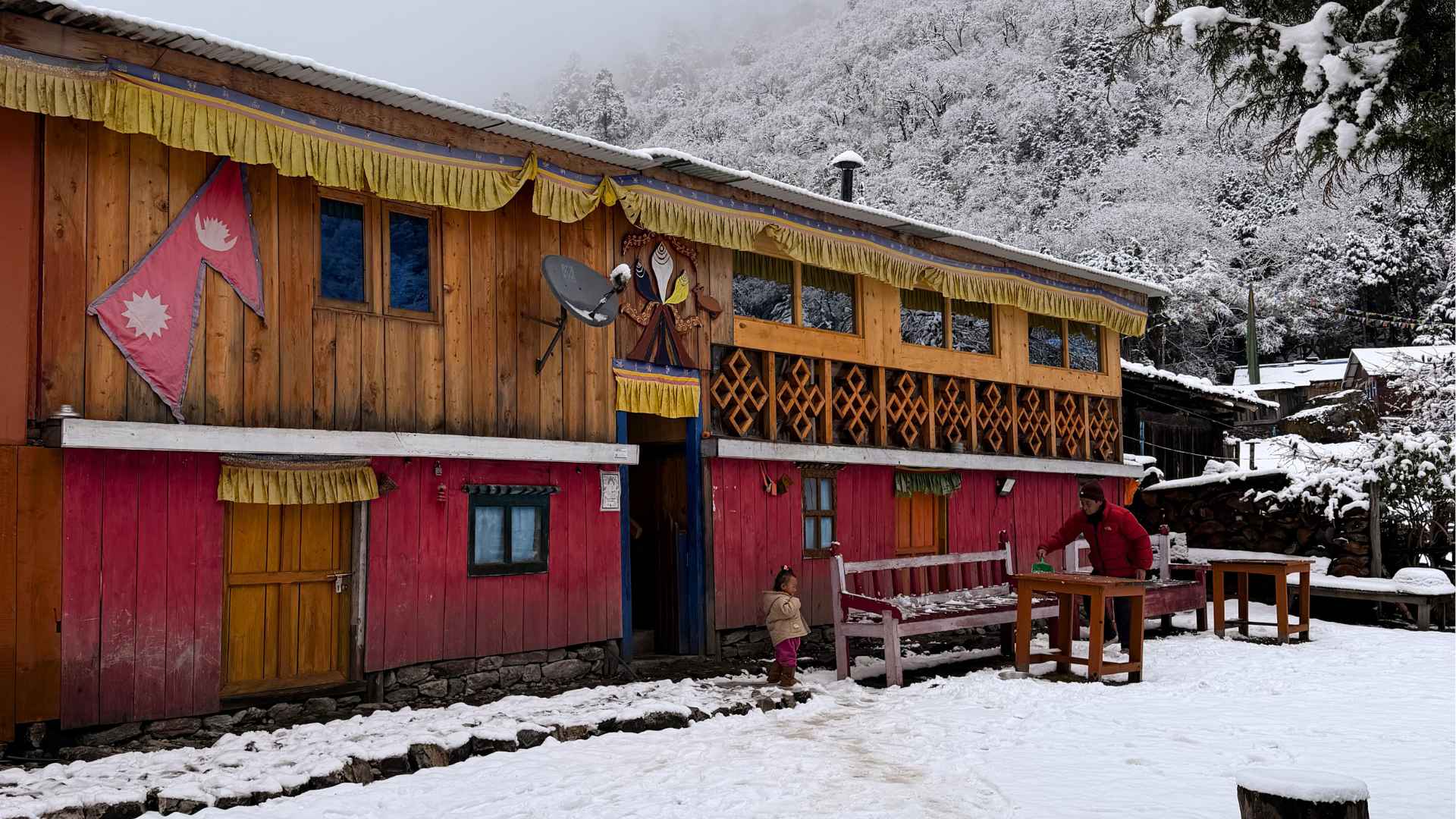
Ghunsa was my favourite town on the whole trek. Probably because it was pretty big and our teahouse sold homemade brownies and had a proper coffee machine. It may only be a few days into the trek, but these kinds of things really perk you up.
On the way, you’ll stop for lunch in Phale, a small village set on a stunning plateau, home to an active Tibetan monastery.
This day is slightly longer than your previous ones, taking around 6 hours before reaching Ghunsa at 3,415m (11,204 ft).
Day 7: Acclimatisation day in Ghunsa
I’ve been running hiking tours in Pakistan for four years now, so I know the importance of acclimatising.
The itinerary lists this day as an acclimatisation day, but other groups continued straight on to Kambachen. I personally felt like we could have skipped this day, as we were all feeling great.
My advice is to see how you’re feeling and discuss this with your guide. That being said, an extra day in Ghunsa with hot showers, brownies and good coffee isn’t the worst.
Day 8: Hike to Kambachen
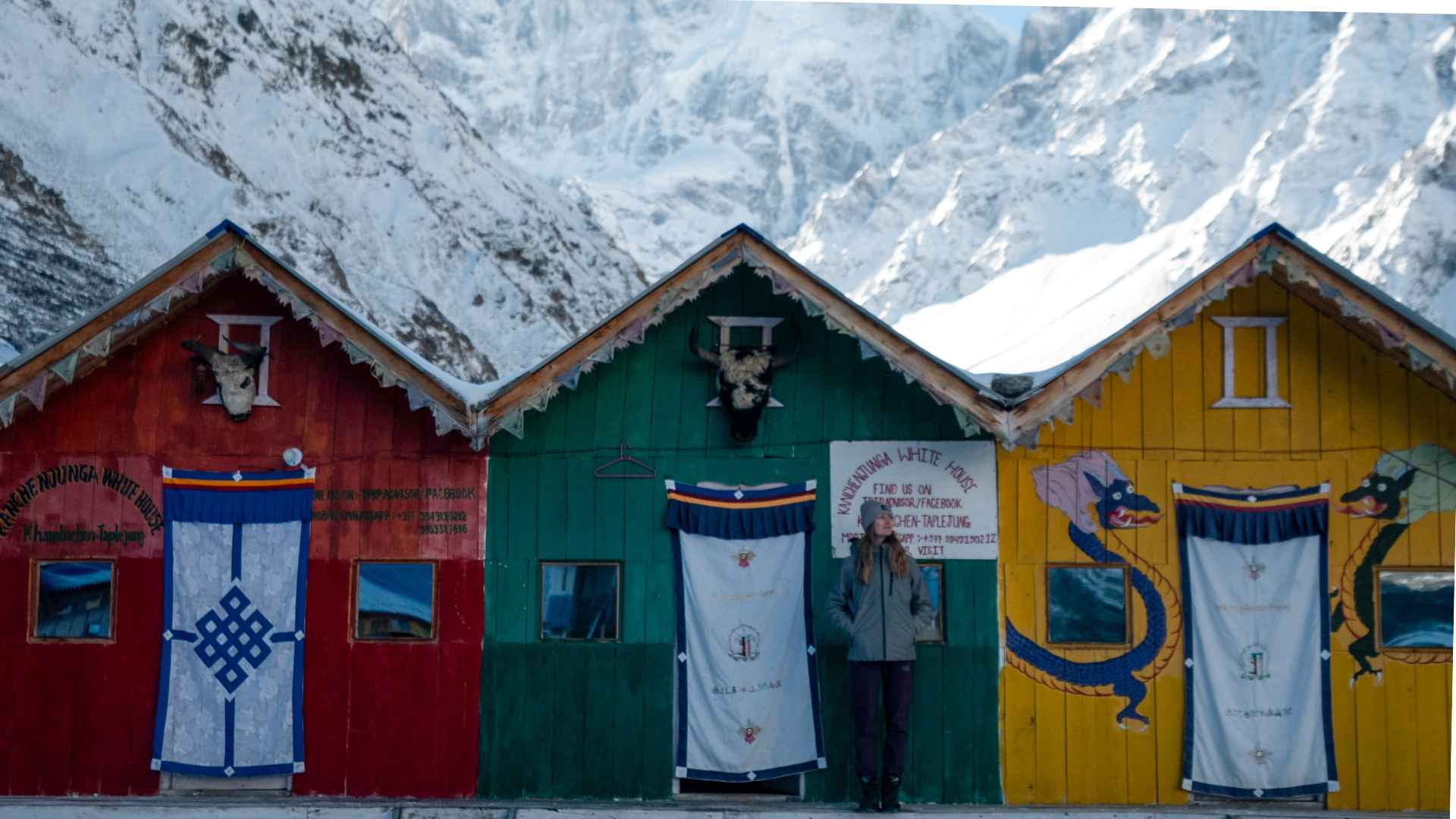
Today you’ll gain around 730m (2395 ft) in elevation as you hike to Kambachen, a very cute village sitting at 4,145m (14599 ft). You may start to feel the altitude on this day, so make sure you drink lots of water to stay hydrated.
The trail gets a bit sketchy in some places as you cross landslide-prone areas that have made the trail pretty narrow and steep. This is where having a guide is very helpful, and crampons if you’re hiking when there’s snow.
Day 9: Acclimatisation hike in Kambachen
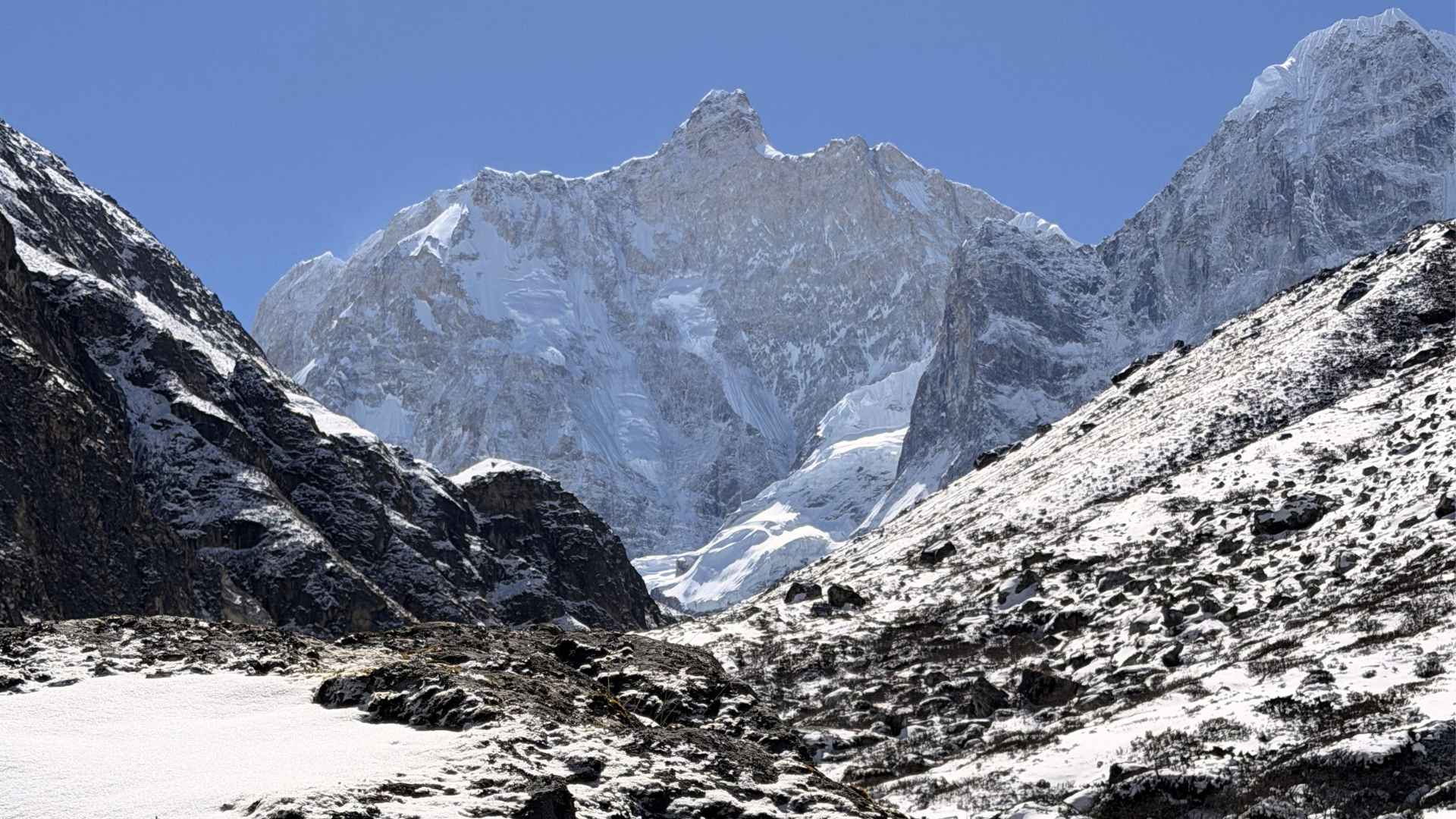
Making sure that you acclimatise properly to avoid getting altitude sickness is important. If you’re thinking about skipping this acclimatisation hike, DON’T!
Nearby is Jannu, the 32nd-highest mountain in the world, with a very distinctive profile. Your acclimatisation hike is a 5-hour out-and-back to the base camp of this phenomenal mountain.
This was one of my favourite days out of the whole trek. The feeling of the mountains towering over you is indescribable.
Day 10: Hike to Lhonak
The route from Kambachen to Lhonak takes you through some landslide-prone areas, so it’s important you’re alert and aware of where you’re walking.
The views from Lhonak are remarkable, with opportunities to see Wedge Peak, Mera Peak, Nepal Peak and the Twins if you’re lucky with the weather.
At 4792m (15,721 ft), prepare for a pretty cold night!
Day 11: Hike to the North Base Camp of Kanchenjunga
Today’s the day you’ve probably been waiting for (or dreading), reaching the north base camp of Kanchenjunga.
It can be quite a challenging climb as you pass yet more areas prone to landslides, cross a glacier and follow a trail that’s usually always pretty snowy.
After celebrating and taking numerous photos of the base camp, you’ll head back down to Lhonak for the night, high on what you’ve just achieved – hiking to 5,143m (16873 ft)!
Day 12: Hike back to Ghunsa
It’s a relatively long day as you hike back from Lhonak to Ghunsa, but it’s downhill, and a hot gas shower will be waiting in Ghunsa.
Day 13: Hike to Sele Le
It’s back to the forest as you begin your ascent to Sele Le. The pass was one of my favourite parts of the trek, especially tomorrow. While it’s one of the harder sections, the views are equally as rewarding and make it all worth it.
Day 14: Hike to Tseram

One of the longest days of the Kanchenjunga Circuit, but also one of the best. The views in the morning were so spectacular that I actually started crying. From the first pass, we could be Jannu, Everest, Makalu and Lhotse.
You’ll cross three passes during your 8-10 hour day – Sinion La Pass (4,450m), Mirgin La (4645 m), and Sinelapche La (4,830m).
Tseram is the perfect place to spend the night after your long day on the pass, as it’s home to a number of cosy teahouses that are a little more developed than most on the Kanchenjunga Circuit.
Day 15: Hike to Ramche
Ramche is your jumping-off point for the south base camp. The hike there takes about 3 hours, and honestly, it’s really a part of the trek worth raving about. It’s simply about getting from A to B.
Once you arrive at Ramche, at 4,610m (15,124m), it’s a different story. You’re surrounded by magnificent mountains.
This teahouse is very basic and gets cold at night.
Day 16: Hike to the South Base Camp of Kanchenjunga
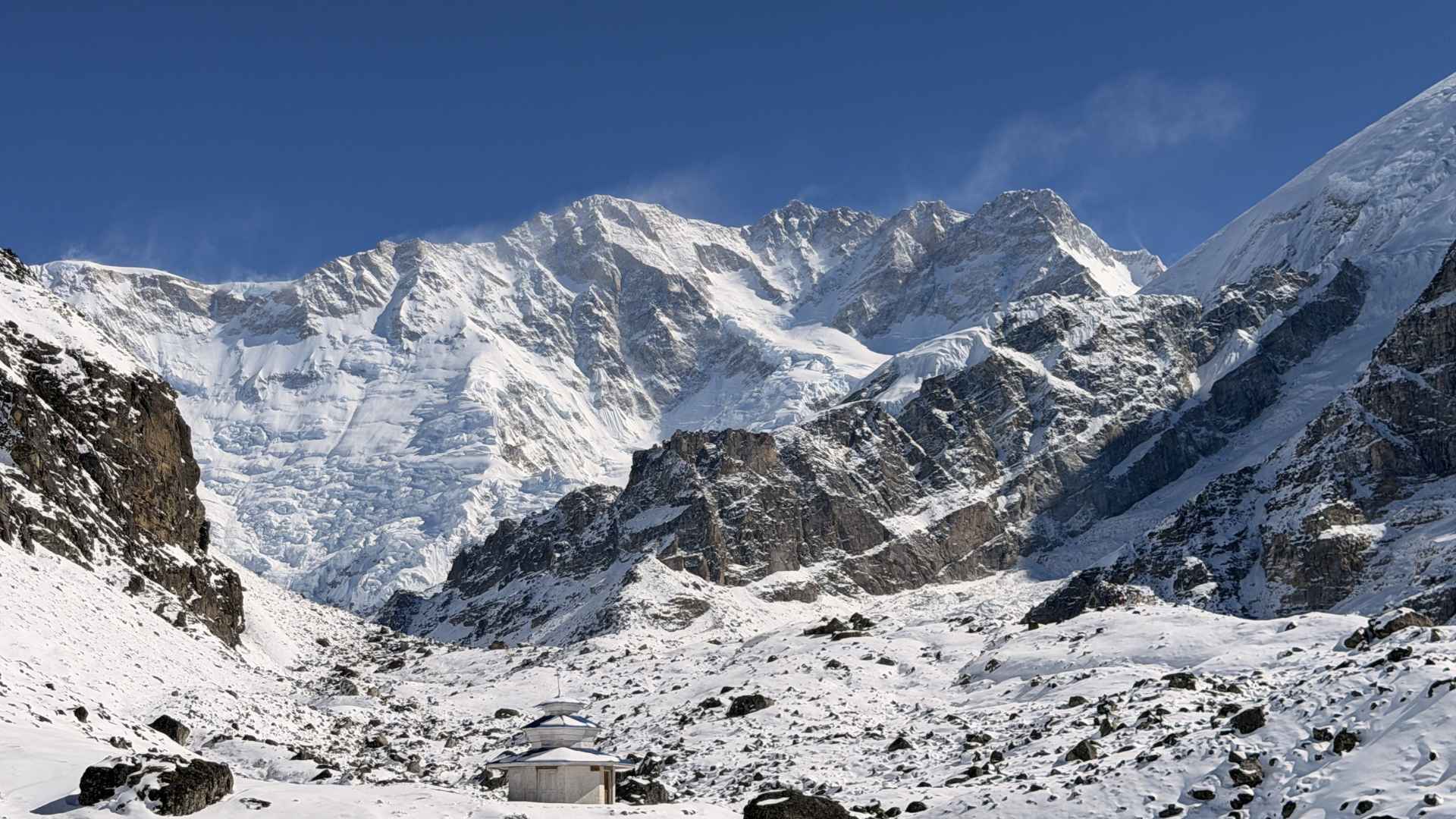
It’s an early morning as you hike to the south base camp of Kanchenjunga. In March, we had a lot of snow, so we had to leave even earlier to make sure we had enough time to get back down to Tseram. It was freezing, and it was probably the coldest I’ve ever been in my life.
But as soon as the sun came over the mountains, all of our worries, complaints and coldness disappeared.
Disclaimer: Everyone refers to this as the south base camp. You won’t actually hike to the south base camp of Kanchenjunga, as it involves crossing a glacier to get to it. Most people hike to a viewpoint where you have panoramic views of Kanchenjunga, the third-highest mountain in the world, and you can see where base camp would be set up if anyone were climbing it.
Caught the bug for hiking to the base camps of some of the highest mountains in the world? We hike to the base camps of the 9th and 27th-highest mountains on our Pakistan group trip.
Day 17: Hike to Kengsra
This is where we changed the itinerary slightly from the one offered by Himalayan Masters (get 5% off with KATE5). We were meant to hike just 4 hours to Tortong, but at this point, we were done with the trek and just wanted to get back to Kathmandu, so we went all the way to Kengsra.
It was a very long day, taking around 9 hours, but we’re glad we did it.
The trail from Tortong to Kengsra was surprisingly one of my favourite sections. It’s a small stone path carved into the mountain. I can’t imagine the amount of time and effort that went into making this trail!
Day 18: Drive back to Taplejung
After a 2-hour descent, the trek is officially over! You’ll reach a pick-up point where you’ll get back in an off-road jeep and head to Taplejung, where it all started.
It’s a surreal feeling that it’s actually over!
Day 19: Drive to Bhadrapur
You know the drill…it’s back in the jeep to drive all the way back to Bhadrapur.
Day 20: Fly back to Kathmandu
As you’ll have spent the night right next to the airport, you’ll likely take the morning flight back to Kathmandu, meaning you’ll arrive there around lunchtime.
Then it’s time to say goodbye to your incredible guide, take a well-deserved shower and grab whatever food you’ve been craving during the trek.
What is accommodation like on the Kanchenjunga Circuit?
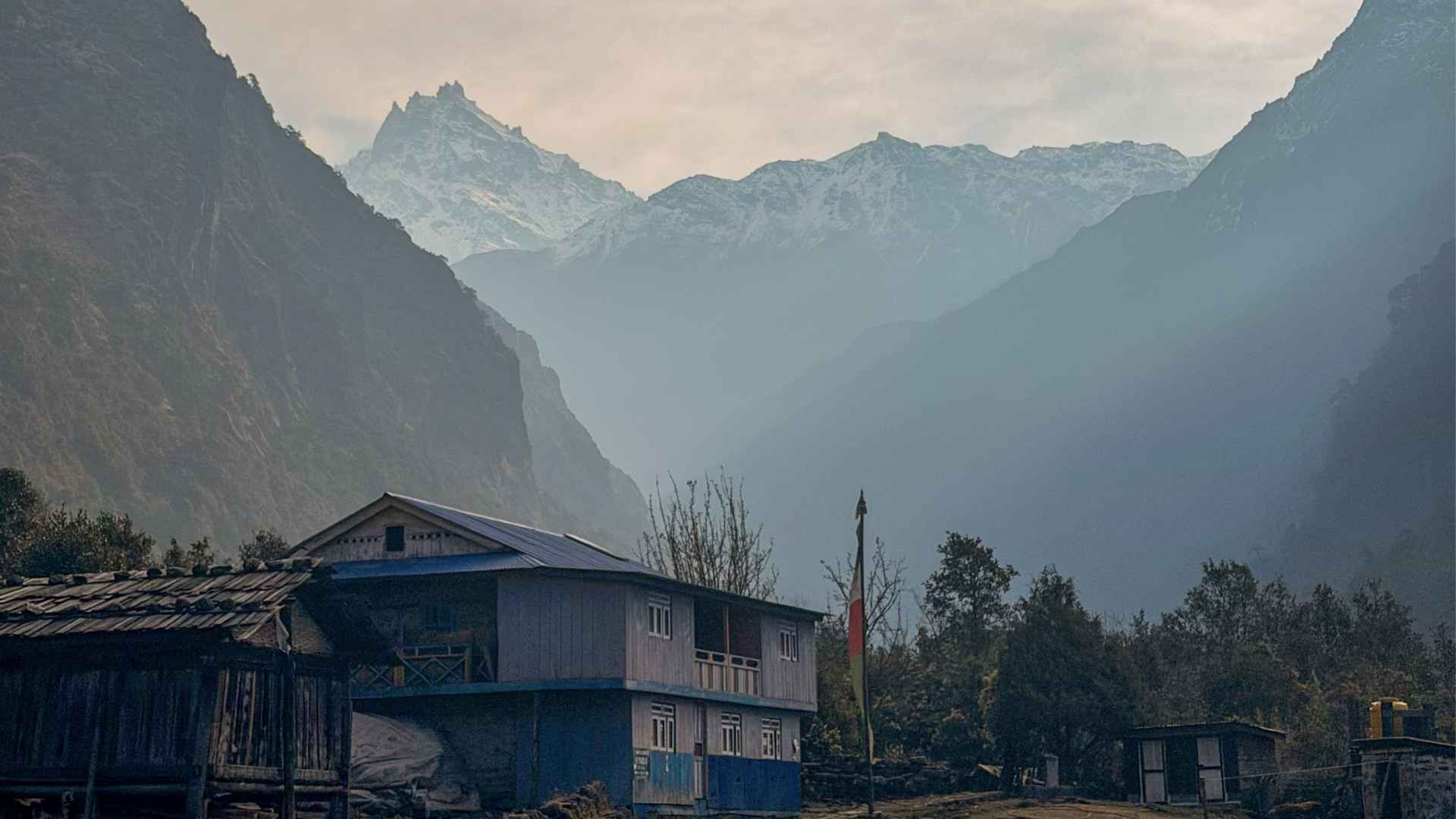
After reading the itinerary and a few blogs, my expectations for accommodation on the Kanchenjunga Circuit were very low, so I was genuinely surprised in the best way.
The teahouses aren’t as developed as those on the Annapurna Circuit, but most of them were cosy, welcoming, and had everything we actually needed.
That said, it’s still a remote trek – many teahouses are built from wood or metal sheets, so insulation is minimal, and nights can be cold. But the beds were surprisingly comfortable, and the toilets were consistently clean, which honestly goes a long way out there.
Food was another big surprise. I’d packed loads of snacks expecting very basic options, but the variety and quality were far better than I imagined given how remote we were. Menus typically included dal bhat (of course), chowmein, fried rice, spring rolls, soups, pasta, and even the occasional “mountain pizza.”
For breakfast, we stuck to a winning combo: omelette with Tibetan bread, topped with peanut butter we brought from Kathmandu. Highly recommend doing the same – it’s simple, filling, and something you’ll actually look forward to each morning.
Would I recommend the Kanchenjunga Circuit?
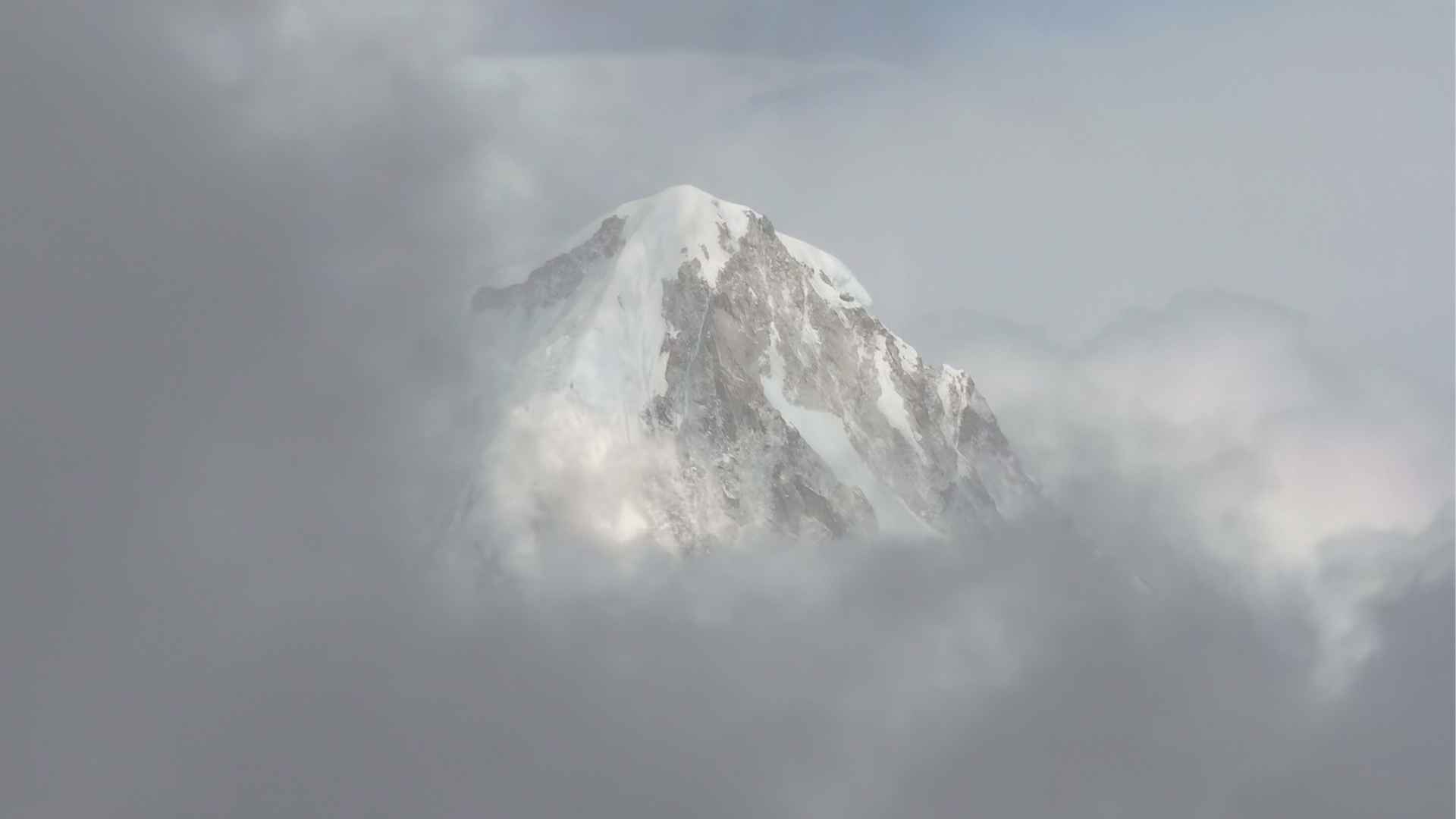
For many people, the Kanchenjunga Circuit simply isn’t realistic—its length makes it hard to fit into limited annual leave. Luckily, Nepal has some incredible shorter alternatives, Manaslu Circuit, Everest Base Camp and Annapurna Circuit, which are shorter and amazing in their own ways.
(Use KATE5 to get 5% off all of the treks mentioned above.)
That said, if you do have the time – and you’re drawn to remote, off-the-beaten-path adventures – the Kanchenjunga Circuit is in a league of its own. As someone who genuinely dislikes crowded trails, this trek was a dream. There were so few people that you quickly got to know everyone along the route, which made the experience feel even more special.
It’s worth noting, though, that this remoteness comes with its challenges. Because it’s far less trafficked, the trail isn’t as well-maintained or developed as some of Nepal’s more popular routes. You’ll encounter landslide-prone areas and sections where the path has been damaged, or completely wiped out, by rockfall and landslides, adding an extra layer of risk to the trek.
If I’ve sold you on the Kanchenjunga Circuit, make sure to reach out to Himalayan Masters. They were the perfect combination of professional, experienced and fun. Plus, you can save 5% with my discount code KATE5.
Who is Stay Wild Travel?
Stay Wild organises group trips for women to adventurous destinations — places you may have thought were too challenging to explore solo or too complicated to plan.
Our tours are all about authentic local experiences, empowering women, and building meaningful connections with the people, culture, and traditional cuisines of each destination.
You’ll share these unforgettable moments with a group of like-minded women, completely stress-free.
FAQs
Who is Stay Wild Travel?
Stay Wild organises group trips for women to adventurous destinations – places you may have thought were too challenging to explore solo or too complicated to plan.
Our tours are all about authentic local experiences, empowering women, and building meaningful connections with the people, culture, and traditional cuisines of each destination.
You’ll share these unforgettable moments with a group of like-minded women, completely stress-free.
Do you run group trips to Pakistan?
We've been running group trips to Pakistan for 3 years and have shown over 60 people how incredible this country is. Check out our women-only Best of Pakistan: Hikes, Hospitality and Hot Chai group tour.
Do you run trips to Kyrgyzstan?
We have one of the best itineraries that you'll find for Kyrgyzstan, one that includes hiking, a 3-day horse trek and spending time with locals. Currently, all of our 2026 Kyrgyzstan trips are sold out, so keep an eye out for 2027 trip dates and make sure you're signed up to the waiting list.
.jpeg)
Keep Exploring
Discover more travel tips, recommendations and stories from inspiring female travellers.
.jpeg)
.jpeg)